
Hospital
treatment
and homely
comfort
Take care of your
and your family’s health
The paediatric department deals with most types of childhood diseases: respiratory, gastro-intestinal, urinary infections, as well as febrile states.
We diagnose and treat allergic diseases, eating disorders and neurological conditions.
Frequent infections, recurrent headaches and stomach-aches, as well as enlarged lymph nodes in children keep parents awake at night. When they get worse, we seek medical help
Usually, it’s the beginning of a long road – with many appointments and examinations that your child needs to go through.
Medicover Hospital quickly resolves the health problems of our youngest patients, without putting them through a lot of unnecessary stress.
Exceptional care of your child
in the best conditions
Quick and professional help

24h a day
with your child

Observation
by specialists

Less stress
for parents
We help according
to the plan and in emergencies
Planned treatment procedures
Paediatric surgery
Hernia surgery
Hernia usually occurs as a result of congenital defects. Coughing and problems with defecation only make the problem more serious. Children usually suffer from:
umbilical hernias;
inguinal hernias;
scrotal hernias (boys).
Hernia is a problem that can only be treated with surgery.
The surgery involves closing the hernia rings and reinforcing the weakened site, e.g. in the abdominal cavity. The procedure does not necessitate long post-operative treatment.
Appendicitis surgery
Appendicitis surgery is necessary when the appendix becomes inflamed. This poses a serious threat to health, especially when the appendix bursts. The cause of the problem is removed under general anaesthesia, using a laparoscope. The surgery leaves only minor cuts on the skin.
Dermatological procedures
Removal of warts, moles, fibromas and other skin lesions.
It is recommended to remove them not only for aesthetic reasons, but primarily out of health concerns. Uncontrolled skin lesions, under the influence of such factors as UV radiation, may become dangerous for the body. Therefore, when you find new lesions on your child’s skin, or if the old ones become larger, change their shape and colour, or become itchy, it is necessary to have them removed preventatively.
Paediatric ent procedures
Tonsil removal
This surgery is performed in the case of enlarged tonsils. Significantly enlarged palatal tonsils may present a mechanical barrier which makes it difficult to breathe and swallow. When the third tonsil is enlarged, it is difficult to breathe through the nose.
In such situations, a physician may decide to remove the tonsils. Overgrown tonsils may also lead to such problems as sleep apnoea, or produce such characteristic symptoms as headaches, problems with learning and concentration, malocclusion, due to the fact that the child keeps his/her mouth constantly open due to difficulties in breathing through the nose.
Tonsil removal is a quick and safe procedure.
Tonsil reduction
The most common problem related to tonsils is that they are overgrown. They become larger during every single infection, but when the infections are too frequent or chronic, the tonsils can no longer return to their normal size. When overgrown, they make it difficult for the child to swallow, and the child also starts to snore and experience problems with breathing.
Moreover, the child’s immunity decreases, because the impaired tonsils stop producing the antibodies necessary to combat an illness. As a consequence, the child is exposed to more health issues.
Adenoidectomy with ventilation drainage
Adenoidectomy is a surgery that involves the excision of a pathological adenoid. It is performed under general anaesthesia. Sometimes, the surgery also requires incision of the tympanic membrane (in order to release the retained discharge) and application of drains in the tympanic cavity of the middle ear.
When conducted under the watchful eyes of the Medicover Hospital’s specialists, adenoidectomy lower susceptibility to upper respiratory tract infections and helps restore nasal patency. It also eliminates the risk of sleep apnoea and reduces recurrent middle ear inflammations.
Paediatric urology
Phimosis
This is a condition in which the prepuce cannot be retracted from the glans of the penis, due to its narrowed and often scarred outlet. The surgery involves the removal of the prepuce (circumcision) or plastic reconstruction of the prepuce to extend its outlet.
In the case of this surgery, it is possible to use a short-term intravenous or local anaesthesia, after which the child can be discharged home on the same day.
Resection of a hydrocele
This surgery is similar to the inguinal hernia operation, with an additional excision of the vaginal process of the peritoneum, and it can be performed laparoscopically. After this surgery, the patient may be discharged home on the following day.
Retained/undescended testicle surgery
This surgery should be performed before the age of 2 and involves pulling the testicle(s) down into the scrotum. If the testicle(s) is (are) located in the abdominal cavity, it is possible to perform the procedure laparoscopically. Sometimes, the surgery requires multiple stages due to the level of difficulty.
The surgery is performed under general anaesthesia, involves opening the inguinal canal, finding the retained testicle, pulling it down into the scrotum and fixing it in place to prevent its return to the inguinal canal.
Cryptorchidism (undescended testicle) may lead to such complications as: testicular cancer, torsion of the testicle, and impaired fertility.
Do not let
an incidentturn into an accident
Sudden illness

24h treatment packages
Hydration package
In the event of vomiting and/or diarrhoea, the body becomes dehydrated. It occurs when the water level in the body falls so much that the body finds it hard to function properly. This may pose a serious threat to babies, small children and elderly people.
The child hydration package we offer is a service for children of all ages. Its purpose is to perform preliminary diagnostics, intravenous administration of fluids and electrolytes, as well as observation of the child.
Take your child to the hospital if you observe the following symptoms:
less frequent urination
loss of skin elasticity (clayey skin)
dry skin around the armpits
dry mouth and tongue
fever
convulsions
loss of consciousness
The child hydration observational package includes:
a 24-hour stay or hospitalisation of the child in the Paediatric Department;
continuous medical and nursing care in the department;
laboratory tests.
Type of treatment is always determined by the admitting physician, based on the medical indications found during the examination.
Fever/infection package
If your child has a fever every few weeks, and you and your paediatrician do not know why, while antibiotics bring only temporary improvement… Come to the Paediatric Department at Medicover Hospital for diagnostics. We know what to look for.
Take your child to the hospital if you observe the following symptoms:
recurrent febrile states;
fever of unknown etiology.
The child hydration observational package includes:
a 24-hour stay or hospitalisation of the child in the Paediatric Department;
continuous medical and nursing care in the department;
laboratory tests
Diagnostic packages
Diagnostics of obesity
If your child suffers from obesity, i.e. when the Body Mass Index exceeds the 97the percentile for his/her age, or the waist measurement is greater than 88 cm, Medicover Hospital can perform diagnostics and help your child return to normal weight.
Diagnostics of headaches
Everybody has headaches from time to time, but if your child often complains of this problem, and the headaches fail to subside or are poorly responsive to painkillers, schedule a consultation at Medicover Hospital. Our paediatrician, after taking the medical history and conducting an examination, will qualify you for specialist diagnostics, which will end with a neurological consultation.
Growth deficiency package
Is your child under the care of an endocrinologist due to his/her height being below the 3rd percentile? Further specialist examinations are necessary – nocturnal release of hormones or a stimulation test with arginine and glucagon. We conduct them in friendly, safe and comfortable conditions for your child.
Diagnostics of anaemia
Is your child suffering from anaemia and has been taking iron supplements for a long time, without any improvement? It may be necessary to expand diagnostics and search for the cause.
Diagnostics of enlarged lymph nodes
If you child has had enlarged lymph nodes for some time or “a lump” has suddenly appeared on his/her neck, our team of paediatricians and radiologists will do all they can to find the cause.
Vaccination package
Does your child have strong allergies, especially to chicken protein, and after vaccination experienced sudden adverse reactions, including decreased blood pressure, fainting or breathlessness? Are you afraid to vaccinate your children in the outpatient clinic, but you know that vaccinations are necessary? We suggest that you have your child vaccinated while hospitalised in the Paediatric Department in order to guarantee that your child is safe and vaccinated properly.
Food challenge test package
Does your baby have a suspected allergy to cow milk protein, and your paediatrician recommended a food challenge test with milk or dairy products? Don’t worry, we will do it together – easily and safely in the Paediatric Department at Medicover Hospital.
Gastroscopy
Gastroscopy is completely safe in children. It can be performed in almost every child. The procedure helps to visualise the larynx, the oesophagus, the stomach and the duodenum. During the examination, we collect small fragments of the mucous membrane, which is completely painless.
No special preparation is required for the examination, except the child needs to be fasting for 6 hours before the examination. Because safety is a priority, our Hospital provides your child from the very beginning with the exceptional care of a paediatrician and anaesthetist, as well as a nursing team.
Colonoscopy
Diagnostic endoscopy of the lower section of the GI tract is an examination that assesses only the final section of the large intestine. It is unpleasant, but painless, and therefore may be performed without sedating your child. Full colonoscopic examination is unpleasant and may be painful. Therefore, it is performed under general anaesthesia.
A colposcopy is performed to diagnose the causes of stomach-aches, GI tract bleedings, diarrhoea, or to collect samples of the mucous membrane from the GI tract for pathomorphological examination. Full colonoscopic examination requires cleansing of the intestine, and therefore the preparation procedure before the examination takes place in hospital conditions. Because safety is a priority, our Hospital provides your child from the very beginning with the exceptional care of a paediatrician and anaesthetist, as well as a nursing team.
Resonance Imaging
Nuclear Magnetic Resonance (NMR) is currently the most modern and precise non-invasive method for visualising the human body. In paediatrics, it offers the possibility of detailed and safe assessment of the anatomy and pathologies in the child’s body. MRI examination causes no adverse biological reactions in children. Nor does it affect pharmacological treatment. An MRI examination is safe for children, but it is also important to ensure their well-being and comfort during the procedure.
Because safety is a priority, our Hospital provides your child from the very beginning with the exceptional care of a paediatrician and anaesthetist, as well as a nursing team.
We also provide services under health insurance packages, including: AP Companies, Henner, Bupa, MSH International, Euro Center, Tricare, GBG, Cigna.
At the clinic, we provide
parents and children with access to:
Quick and professional help
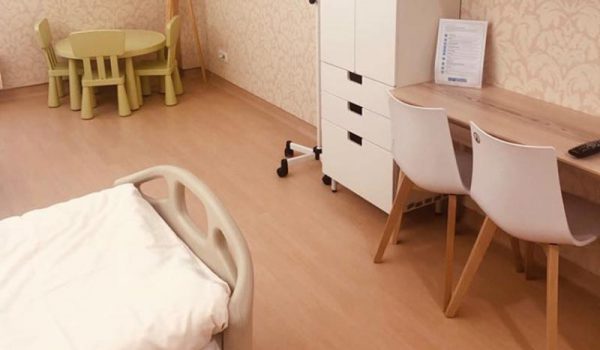
Double
room

Equipment:
- bathroom
- TV set
- a comfortable armchair with a sleeping function

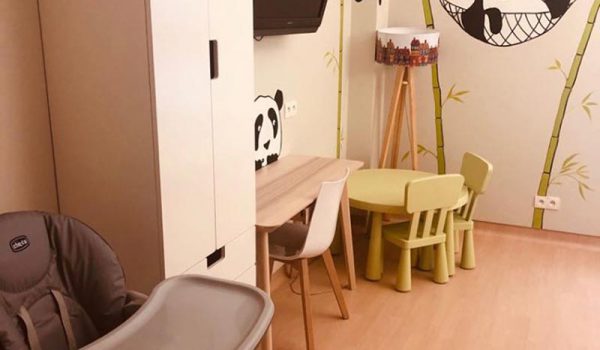
Single
room

Equipment:
- bathroom
- TV set
- additional bed
- full board for the accompanying person

Do you want your child to receive exceptional, professional hospital care in comfortable conditions?
Choose the paediatric department at Medicover Hospital.
- admissions day and night, 7 days a week, including holidays
- quick and comprehensive laboratory, imaging and endoscopic diagnostics (gastroscopy, colonoscopy, cystoscopy)
- professional care by a multidisciplinary team of medical practitioners
- immediate help, without waiting in a queue
- medical safety
- comfortable conditions for the child and parent
Virtual tour
of Medicover Hospital
Select tour
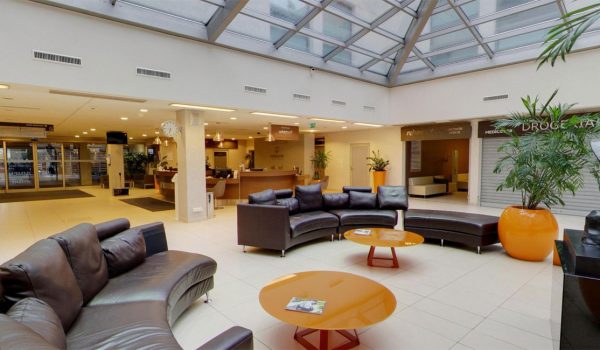 Main hall
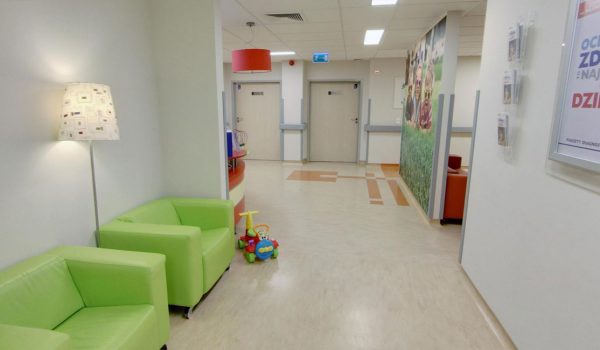 1st floor - Paediatrics Hall - entrance
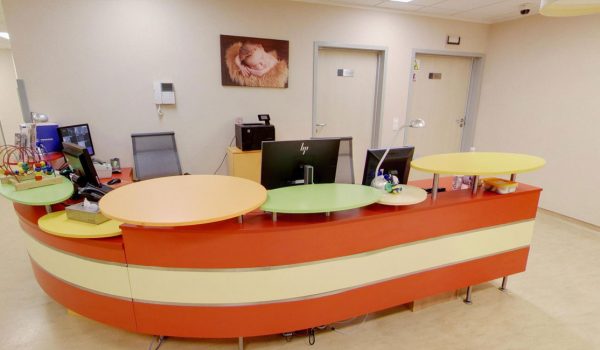 1st floor - Paediatrics - Reception
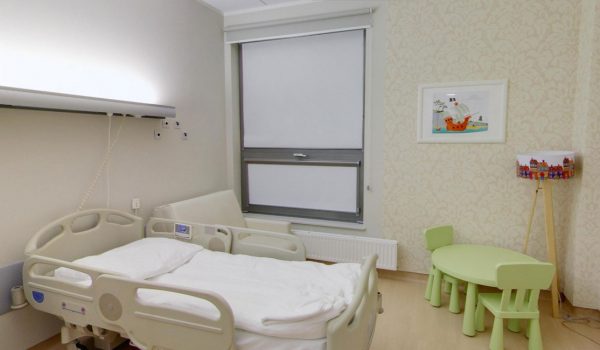 1st floor - Paediatrics - patient's room
The team of physicians of the Clinic
of Paediatrics and Paediatric Surgery
The team of physicians is supervised by
Radosław W. Suchner MD

Radosław W. Suchner
MD
Department head
Radosław W. Suchner MD, Head of the Paediatrics and Paediatric Surgery Department at Medicover Hospital. He is a graduate of the Second Faculty of Medicine of the Medical University of Warsaw and the Faculty of Management of the University of Warsaw. He also holds a specialisation in paediatrics.
He has many years of experience in working on paediatric and infant wards, as well as in a paediatric out-patient clinics and paediatric emergency departments.
He created the TRIAGE system for children in the emergency department of the Western Hospital. He completed courses in paediatric ultrasound at the Roztocze School of Ultrasound and Siemens Healthcare. He is a great promotor of the idea that ultrasound should become “the second stethoscope” in the daily work of a physician.
He is fluent in English, and can also communicate in Russian.
Anita Rajchel-Robinet
MD
Paediatrician
She graduated from the Second Faculty of Medicine at the Medical Academy in Warsaw in 2000. Since 2010, she has been working at Medicover Hospital.
She started her paediatric career in 2002 as a resident physician in the Infants’ Clinic of the Children’s Memorial Health Centre Institute, where she gained experience in paediatrics and neonatology. She has many years of experience in both clinical and outpatient work. She is also the author and co-author of scientific publications.
She speaks English and French.
Magdalena Urbańska
MD PhD
Paediatrician
A graduate of the First Faculty of Medicine at the Medical Academy of Warsaw. She obtained her specialisation in paediatrics and the doctoral degree in the Clinic of Paediatrics of the Medical University of Warsaw at the Children’s Clinical Hospital at Działdowska Street. She is the author and co-author of numerous medical publications on the use of probiotics in the treatment of children. She has many years of experience in both clinical and outpatient work.
She is fluent in English, but can also communicate in German and Finnish.
Andrzej Załęski
MD PhD
Paediatrician, infectious diseases
He graduated with honours from the Medical Faculty of the Medical University of Warsaw. In 2015, he completed a specialisation training course in the field of paediatrics, and in 2019 – in the field of infectious diseases. He completed with distinction the prestigious training courses in infectious diseases conducted by the American Austrian Foundation in Salzburg.
Since 2013, he has been an academic lecturer, giving lectures in Polish and English. He defended his doctoral degree in paediatrics in 2018. He is a member of Polish and international scientific societies, and has taken active part in international meetings and conferences on multiple occasions. He is the author of dozens of scientific papers published in both Polish and foreign scientific journals.
He has been working at Medicover Hospital since 2013, providing care to the youngest patients at the highest world level.
Angelika Pytlak
MD
Paediatrician, infectious diseases
She is a graduate of the Jagiellonian University Medical College (CMUJ), specialising in paediatrics. She gained her professional experience at the Neonatology and Neonatal Pathology Ward and the Emergency Department of the Prof. dr. med. Jan Bogdanowicz Children’s Hospital in Warsaw.
She is interested in dietetics, gastroenterology, children’s nutrition and lactation counselling. Speaks English fluently. She is experienced in working in an international, multicultural environment.
Privately, she is a mother of three. She likes travelling and is interested in mountain and cycling tourism.
Other members of the medical team
Patients are treated by a group of eminent specialists
Krzysztof Bronowicki
MD
Paediatric and Oncological surgery consultant
Justyna Dusińska
MD
Paediatric surgeon
Iwona Gwizdalska
MD
ENT specialist
Andrzej Kowal
MD
Paediatric surgeon
Tomasz Szafrański
MD
Paediatric surgeon
Stanisław Warchoł
MD
Paediatric surgeon, urologist
Edyta Witkowska
MD
ENT specialist
Frequently
asked questions
Would it be possible to get admitted to the hospital for diagnostic purposes? What does the hospitalisation price include?
It is possible to check the state of your health in the Cardiology and Internal Medicine Department.
For this purpose, it is necessary to booka qualification appointment. During the appointment, the physician will review your complete medical records and history. The cost of hospitalisation at Medicover Hospital is determined by the Hospital Care Coordinator based on the post-qualification card.
What does the hospitalisation price in the department include?
The price of hospitalisation at Medicover Hospital includes the cost of treatment, hospitalisation in a room, medical care and meals.
Is it possible to guarantee/book a single, family room?
The Department has more than 30 beds in high-standard rooms. Patients have access to comfortable single- and double-rooms. We create friendly and homely conditions for patients, maintaining full medical safety, thus reducing recovery time and related stress.
Do you transport patients to other hospitals?
Medicover Hospital’s equipment, including laboratory and imaging diagnostics machines, the multi-disciplinary teams of medical practitioners and the Intensive Care Unit guarantee comprehensive care. However, if there is an emergency requiring transportation to another centre, Medicover Hospital coordinates the transportation process for the patient.
Admission to the hospital
Step by step
Qualification appointment
During your appointment at the Consultation Centre, the physician will discuss your health, inform you about the treatment methods and any potential risks related to the planned treatment. Next, you will make a decision together about necessary examinations, tests, procedures and the course of hospitalisation. If you decide to have a procedure/surgery performed at our hospital, the doctorwill issue a hospital treatment qualification card.
- You can schedule an appointment with a chosen specialist at the Medicover Hospital Consultation Centre by calling: 500 900 900.
- Bring along your previous examination and test results and, if you have, a referral for hospitalisation.
Meeting your hospital care coordinator
A meeting with the Hospital Care Coordinator who will show you round the hospital, explain the conditions of admission and stay, as well as payment rules.
Signing the agreement
After concluding the agreement, the patient pays a deposit (no later than 8 days before the planned hospitalisation date).
Admission date
The admission data is agreed between the patient and the physician during the qualification appointment. The Hospital Care Coordinator will contact you to confirm the admission timeto the hospital.
Discharge from the hospital
During discharge from the hospital, the final settlement of the patient’s hospitalisation costs is made. It is possible to pay by credit card or in cash. Any surplus will be returned according to your instructions. After discharge, the patient may receive one free-of-charge follow-up appointment.
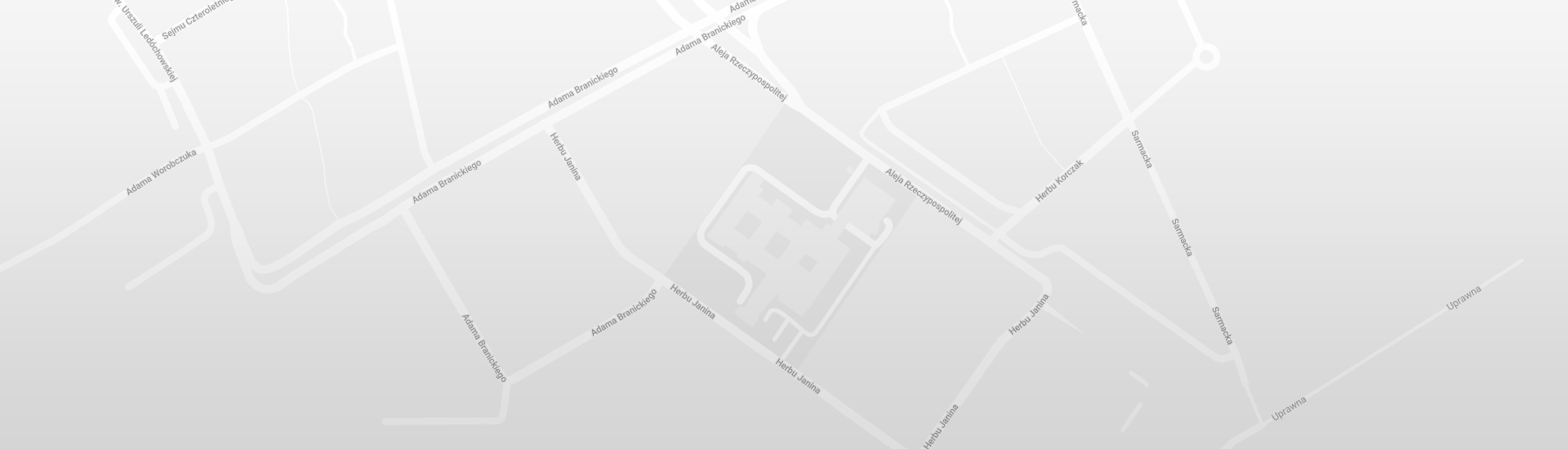
How to
reach us
Map
with directions
to Medicover
Hospital
Patients using public transport may reach us by bus No. 217 and No. 522.
The bus stop (Branickiego) is located approx. 50 m from the Hospital.
GPS 52,15513 N, 21,07863 E, 52’9’18 N, 21’4’43 E
Dear Patients,
we would like to inform you that the three-level car park located opposite the entrance to the Hospital has narrow passages. Therefore, it can be difficult to manoeuvre (especially larger vehicles). In this situation, we recommend to use the external car park, which has 117 parking spaces and is located at the back of the building.